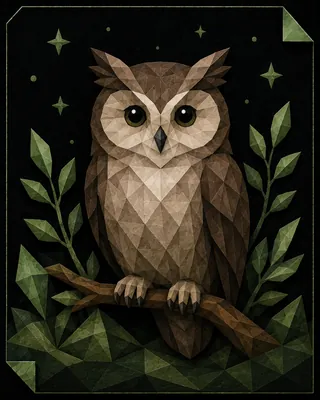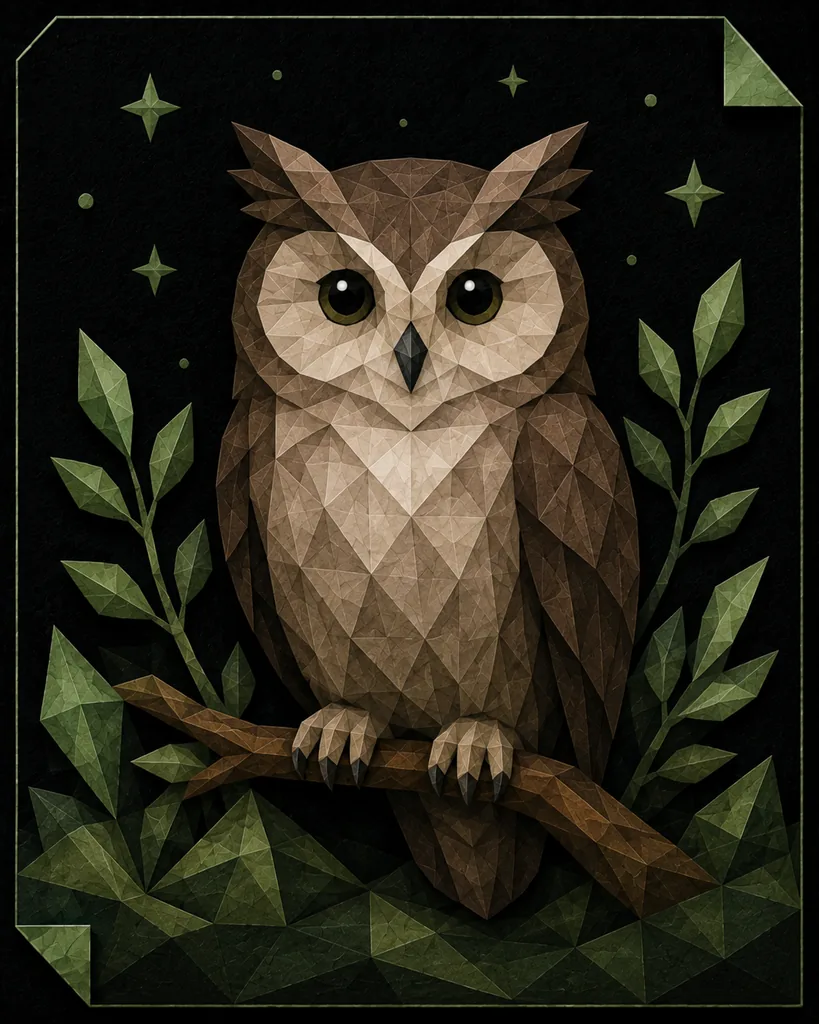
INFJ Animal: The Owl
Insightful and quietly intense — reads patterns and people others miss.
What animal represents the INFJ personality?
In TypeAtlas, the INFJ animal is the Owl. As the INFJ animal archetype, the Owl represents a quiet, reflective, pattern-seeking style: observing before speaking, looking beneath the surface, and organizing experience around meaning and values.
This TypeAtlas pairing is an editorial metaphor, not a scientific or diagnostic classification. Other lists may use a different animal.
For a broader look at the type, read the full INFJ personality guide, including career, relationships, communication, stress, money, and growth.
INFJ at a glance
Strengths
- Often notices interpersonal patterns and emotional cues.
- Holds a clear, principled vision of how things should be
- Pairs deep empathy with real conviction — warm but not a pushover
- Weaves ideas, people, and meaning into a coherent whole
Growth edges
- Gives so much to others that their own needs go unspoken until they burn out
- Quietly perfectionistic and hard to fully satisfy
- Avoids conflict and bottles things up, then withdraws all at once
The INFJ across life
Career & work fit
INFJs need work that aligns with their values and lets them help people in a deep rather than transactional way. They do best with a sense of mission, meaningful one-on-one or small-group contact, and quiet space to process. They struggle in cutthroat, purely profit-driven, or impersonal environments, and quietly resent work that feels meaningless no matter how well it pays.
Relationships & compatibility
INFJs want depth, sincerity, and a real meeting of minds; surface-level connection leaves them lonely even in a crowd. They are devoted, intuitive partners who often sense a need before it is spoken. The risk is over-giving, holding others to a private ideal, and going silent when hurt instead of saying what is wrong — until they withdraw entirely.
Communication style
INFJs communicate warmly and carefully, attuned to how their words land. They are gifted at making people feel understood and at framing a vision, but they soften or withhold hard truths to keep the peace, and tend to hint at a need rather than state it directly.
Work style & team role
On a team the INFJ is the conscience and the glue — reading the group's mood, advocating for people, and keeping the work tied to a larger purpose. They contribute most with trust, harmony, and a mission they believe in.
Stress & recovery
INFJs are drained by conflict, overstimulation, and long stretches of self-neglect. Under stress they over-give until depleted, turn self-critical, and can flip into uncharacteristic detail-obsession or sharp anger as their composure cracks. Left too long, they detach abruptly from the people who hurt them.
Decision-making & money
INFJs tend to treat money as a means to a meaningful life rather than a scoreboard. They are usually careful, values-driven spenders who are generous with people and causes they care about, sometimes to their own cost. They can avoid dealing with finances they find stressful or distasteful.
Growth edges
A common INFJ growth edge is making room for their own needs and limits. They attend so closely to everyone else that their own needs, limits, and anger go unspoken until they overflow. Growth looks like naming needs early and directly, accepting that healthy conflict is not the same as harm, and letting 'good' be enough instead of chasing a private ideal.
Types most similar to the INFJ
These four types each share three of the INFJ’s four traits — the closest neighbors on the map, and the most common “INFJ vs.” comparisons.

The Intuitive Feelers (NF) family
The INFJ belongs to the values-driven, people-focused types who lead with empathy and meaning. Its family members:

INFJ frequently asked questions
What animal is an INFJ?
In TypeAtlas, the INFJ animal is the Owl, an editorial metaphor for observation, pattern-seeking, and reflection. It is not a scientific or diagnostic classification; other lists may use a different animal.
What does INFJ stand for?
INFJ stands for Introversion, Intuition, Feeling, and Judging — the four trait preferences that define the type. Insightful and quietly intense — reads patterns and people others miss.
Which careers might an INFJ explore?
No type determines career fit. Examples an INFJ might explore include Mental Health Counselor / Therapist, Clinical / Counseling Psychologist, and Writer / Author, especially when the work offers meaningful one-to-one contact, depth, and values alignment. Interests, skills, values, and constraints matter more than type alone.
Does personality type predict INFJ compatibility?
Personality type does not reliably predict compatibility. An INFJ can build a strong relationship with any type; shared values, communication, emotional safety, and effort matter more than four letters.
What is a common growth edge for an INFJ?
A common INFJ growth edge is letting personal needs go unspoken until strain builds. A useful counterweight is naming needs early, setting limits, and treating healthy disagreement as manageable; this is a tendency, not a fixed flaw.
Which of the 16 are you?
This profile is the INFJ. Take the free Personality Type Test — 32 quick questions, about five minutes — to find your own four-letter type, your animal, and a confidence score for each trait.
Take the free Personality Type TestAll 16 types as animals
Every TypeAtlas personality type and its animal. Tap any to read the full profile.