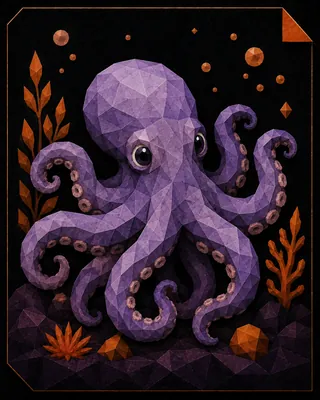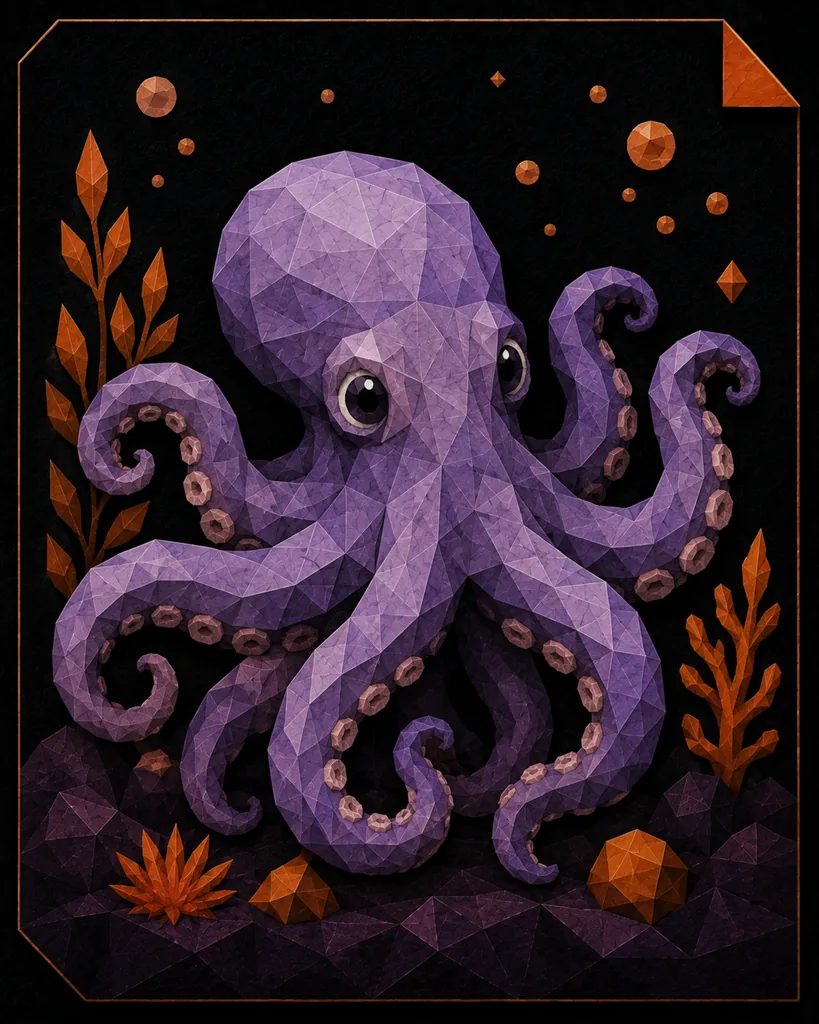
INTP Animal: The Octopus
Analytical and curious — maps how ideas actually fit together.
What animal represents the INTP personality?
In TypeAtlas, the INTP animal is the Octopus. When picturing the INTP as an animal, the Octopus represents a curious, flexible, analytical style: exploring a problem from several angles, testing how ideas connect, and adapting the model when new information appears.
This TypeAtlas pairing is an editorial metaphor, not a scientific or diagnostic classification. Other lists may use a different animal.
For a broader look at the type, read the full INTP personality guide, including career, relationships, communication, stress, money, and growth.
INTP at a glance
Strengths
- Dissects complex problems with cool, original logic
- Endlessly curious — follows ideas wherever they lead
- Spots inconsistencies and hidden assumptions instantly
- Independent thinker, unswayed by what is popular
Growth edges
- Gets lost in theory and struggles to ship or finish
- Neglects the practical, emotional, and social sides of things
- Over-debates precision and procrastinates on action
The INTP across life
Career & work fit
INTPs need autonomy, intellectual depth, and problems worth understanding for their own sake. They thrive where they can analyze, model, and build, with freedom to go down rabbit holes and few people-management demands. They struggle with rigid routine, heavy bureaucracy, emotional-labor-intensive roles, and environments that prize politics or appearances over correctness.
Relationships & compatibility
INTPs are loyal, low-drama partners who value intellectual companionship and independence over constant emotional intensity. They show care through engagement, problem-solving, and honesty rather than grand gestures. The risk is neglecting emotional expression, disappearing into their own head, and struggling to name or notice feelings — theirs or a partner's.
Communication style
INTPs communicate precisely and logically, and love a good intellectual exchange. They are careful about accuracy — sometimes to the point of qualifying everything — and can seem detached, struggle with emotional talk or small talk, and miss social subtext others read easily.
Work style & team role
On a team the INTP is the analyst and the truth-checker — the one who finds the logical flaw, designs the cleaner solution, and questions assumptions everyone else accepts. They contribute most when given autonomy and a hard problem, and less in roles heavy on coordination or emotional labor.
Stress & recovery
INTPs are drained by rigid structure, emotional demands, tedious detail, and pressure to perform socially. Under stress they overthink and detach further, and can erupt into uncharacteristic emotional outbursts or harsh self-doubt as their suppressed feeling side breaks through. Chronic overwhelm leaves them frozen and unable to act.
Decision-making & money
INTPs tend to treat money rationally and somewhat abstractly — they grasp the theory of investing and compounding well but can neglect the mundane upkeep of budgeting and tracking. They are usually modest, non-status spenders who would rather optimize than splurge, and they benefit from automating the parts they find boring.
Growth edges
The INTP's growth edge is acting and connecting, not thinking. Understanding is never the gap; finishing, shipping, and tending the human and practical sides are. Growth looks like turning analysis into a completed thing, treating feelings as real and worth voicing, and accepting 'good enough and done' over 'perfect and theoretical.'
Types most similar to the INTP
These four types each share three of the INTP’s four traits — the closest neighbors on the map, and the most common “INTP vs.” comparisons.




The Intuitive Thinkers (NT) family
The INTP belongs to the strategic, systems-minded types who lead with logic and long-range vision. Its family members:

INTP frequently asked questions
What animal is an INTP?
In TypeAtlas, the INTP animal is the Octopus, an editorial metaphor for curiosity and flexible problem-solving. It is not a scientific or diagnostic classification; other lists may use a different animal.
What does INTP stand for?
INTP stands for Introversion, Intuition, Thinking, and Perceiving — the four trait preferences that define the type. Analytical and curious — maps how ideas actually fit together.
Which careers might an INTP explore?
No type determines career fit. Examples an INTP might explore include Software Developer, Computer & Information Research Scientist, and Mathematician, especially when the work offers autonomy, intellectual depth, and complex problem-solving. Interests, skills, values, and constraints matter more than type alone.
Does personality type predict INTP compatibility?
Personality type does not reliably predict compatibility. An INTP can build a strong relationship with any type; shared values, communication, emotional safety, and effort matter more than four letters.
What is a common growth edge for an INTP?
A common INTP growth edge is extending analysis past the point of useful action. A useful counterweight is defining “good enough,” setting a deadline, and treating emotional information as relevant data; this is a tendency, not a fixed flaw.
Which of the 16 are you?
This profile is the INTP. Take the free Personality Type Test — 32 quick questions, about five minutes — to find your own four-letter type, your animal, and a confidence score for each trait.
Take the free Personality Type TestAll 16 types as animals
Every TypeAtlas personality type and its animal. Tap any to read the full profile.