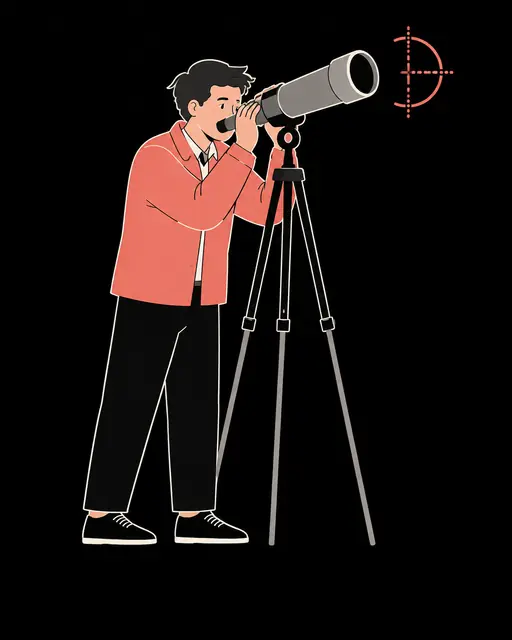
The ISTP is the person who fixes the thing everyone else gave up on, says little while doing it, and is somehow completely calm in the exact moment everyone else loses their head. They are practical, logical, and endlessly curious about how things work — not in the abstract, theoretical way of the thinker who loves ideas, but in the concrete, hands-on way of someone who would rather open the machine and find out. In the Personality Type Test map this profile is named the Tinker, because that is the ISTP at their most characteristic: hands deep in a problem, taking it apart, understanding it, and putting it back together better than it was. It is a remarkably capable way to be wired, and one whose quiet competence is easy to overlook until it's the only thing that helps.
This guide is built around the seven dimensions TypeAtlas reports on — career, relationships, communication, conflict, stress, money, and growth — because a personality type is only useful when it touches the real decisions of a life. One rule holds throughout: these are tendencies, not destiny. A type describes where your energy and attention naturally run, not a ceiling on who you can become.
§I.Who the ISTP really is
Four trait axes combine to produce the ISTP pattern. Introversion (I) means energy is restored alone and spent in company. Sensing (S) means attention runs toward concrete facts, the physical world, and immediate reality rather than abstract patterns. Thinking (T) means decisions are weighed against logic and effectiveness before personal or interpersonal considerations. And Perceiving (P) means life is kept open, flexible, and spontaneous rather than planned and closed. The result is someone who engages the physical world directly, analyses it logically, and prizes the freedom to respond to what's in front of them rather than following a fixed plan.
At the centre of the ISTP is a cool, practical intelligence aimed at the tangible world. They learn by doing, trust direct experience over theory, and have an instinctive understanding of how physical and mechanical things work. They are independent to the bone, resistant to rules and routine that don't make practical sense, and notably calm under pressure — the rising chaos that overwhelms others tends to sharpen them. They keep their inner world private, react to problems with action rather than discussion, and feel most alive when solving something real with their own hands and wits.
The recognised strengths of the type cluster around practical mastery: exceptional hands-on problem-solving, logical and analytical ability applied to the concrete, calm and competence in a crisis, adaptability, independence, and genuine curiosity about how things work. The recognised growth edges are the same traits unbalanced: emotional detachment and difficulty expressing feelings, an aversion to commitment, long-term planning, and routine, a tendency toward risk-taking and thrill-seeking, insensitivity to others' emotional needs, and a reluctance to engage the inner and interpersonal world. None of this is fixed. It is simply where this wiring tends to drift under load.
A note before we continue: TypeAtlas measures four continuous axes, not four switches. You might be clearly Sensing and Perceiving but only mildly Thinking. If any axis sits near the middle, read the adjacent type too — a "borderline T" ISTP will recognise a great deal of the ISFP (the Aesthete) in themselves. The four-letter code is shorthand for a position on four sliders, nothing more.
§I½.How the ISTP is often mistyped
The most common mix-up is ISTP vs ISFP. Both are introverted, sensing, perceiving types who are independent, present-focused, hands-on, and private, so they are frequently confused — but the deciding axis is Thinking versus Feeling. The ISTP (the Tinker) approaches the world through logic and analysis, drawn to how things work and to solving practical problems; the ISFP (the Aesthete) approaches it through personal values and aesthetics, drawn to beauty, expression, and authenticity. An ISTP wants to understand and fix the mechanism; an ISFP wants to create or experience something that feels true and beautiful. If your Thinking–Feeling axis sits near the middle, you will recognise yourself in both.
The second common mix-up is ISTP vs INTP. Both are introverted, thinking, perceiving types who analyse logically and value independence, but they differ on the Sensing versus Intuition axis. The ISTP (the Tinker) is concrete, hands-on, and present-focused, engaging the physical world directly; the INTP (the Cartographer) is abstract and theoretical, engaging the world of ideas and models. The ISTP wants to take the engine apart; the INTP wants to understand the theory behind it. If your Sensing–Intuition axis sits near the middle, you will recognise yourself in both, and that ambiguity is information, not error. When the four-letter code feels uncertain, the underlying axis positions, with their confidence scores, are far more informative than the label.
§II.ISTP careers: best-fit work and what to avoid
The best careers for an ISTP share three ingredients: hands-on problem-solving (concrete, practical challenges to work out), autonomy (freedom from micromanagement and rigid procedure), and variety and action (changing problems rather than monotonous routine, ideally with a physical or technical dimension). Give an ISTP a real problem, the tools to solve it, and the freedom to do it their own way, and you get someone resourceful, skilled, and unflappable; trap them in a rigid, abstract, or heavily supervised desk job with no tangible problems to solve, and the very capability that makes them valuable goes idle.
Grounded in occupational data, the roles that recur for this profile fall into a few families. For an interest-based career map, see our guide to Holland codes and the six RIASEC career types. In skilled trades and mechanics: mechanics, electricians, machinists, technicians, and pilots. In engineering and technology: engineers, IT and systems specialists, and software and hardware troubleshooters. In emergency and high-stakes work: paramedics, firefighters, and roles in the military and law enforcement where crisis calm is essential. And in technical and physical fields: forensic analysts, athletes and athletic trainers, and roles in construction and the skilled crafts. What unites them is hands-on problem-solving, autonomy, and concrete, often physical, challenge.
Just as useful is the anti-fit. ISTPs tend to struggle in rigidly structured, procedure-bound desk jobs, in highly abstract or theoretical work with no practical application, in roles demanding constant emotional and interpersonal performance, and in micromanaged environments that punish independence. The drain is rarely difficulty — ISTPs handle hard practical problems with ease — it is rigidity, abstraction, monotony, and lack of freedom. A common ISTP career risk is restlessness: a job that becomes routine or constrains their autonomy can lead them to disengage or move on, and a reluctance to plan long-term can leave a genuinely capable person without a clear trajectory. Naming that pattern early is worth more than any further skill.
A practical note on advancement: the ISTP's career tax is rarely capability and often long-term planning and self-presentation. The hands-on skill is real and the patience for office politics, self-promotion, and career strategy minimal. For most ISTPs, doing a little deliberate long-term planning, and tolerating the structure that advancement sometimes requires, unlocks more than any additional technical ability.
§III.ISTP relationships: love, friendship, and compatibility
In relationships the ISTP is independent, low-key, and undemonstrative, valuing their freedom and personal space highly. They are not given to emotional declarations or constant togetherness; instead they show care the way they engage everything — through action and shared activity. They'll fix your car, solve your problem, teach you the thing, and simply enjoy doing things alongside you, and to an ISTP that practical presence is affection. They need a partner who respects their autonomy and doesn't demand constant emotional processing or smother them with togetherness; given that space, they are loyal and steady, if quietly so.
The recurring relationship pattern to watch is emotional unavailability and commitment-shyness. Because ISTPs keep their inner world private and find emotional expression difficult, they can leave a partner unsure of their feelings, default to fixing problems rather than offering emotional support, and feel genuinely uneasy about the long-term commitment conversations that relationships eventually require. This is rarely indifference; it is discomfort with a mode they don't naturally inhabit. The growth move is to recognise that a partner needs to hear and feel their care, not just benefit from it, and to deliberately practise the emotional presence and expression that don't come naturally.
On compatibility, the popular pairings put ISTPs with judging partners who bring warmth and structure to balance their independence — the ESTJ and ESFJ are commonly cited matches. But TypeAtlas's honest position bears repeating: type does not predict relationship success. Shared values, communication skill, mutual respect, and effort matter far more than a four-letter compatibility chart. The most useful thing type offers a couple is not a verdict on whether they belong together, but a shared language for why they each react the way they do when things get hard.
§IV.ISTP communication style
ISTPs are direct, concise, and practical communicators. They say what needs saying in as few words as necessary, deal in facts and concrete specifics, and have little use for small talk, emotional processing, or abstract discussion. They are excellent at explaining how something works and at cutting straight to the practical point, and they tend to let their actions speak rather than their words. A conversation, to an ISTP, is generally for conveying useful information or solving something, not for connection in itself.
The blind spot is the emotional and relational layer. Because ISTPs are sparing with words and uncomfortable with emotional expression, they can seem distant or unresponsive, can miss the emotional subtext of a conversation, and can leave others guessing at what they think or feel. The most valuable communication upgrades for this type are recognising when a moment needs words rather than action or silence, learning to express care and feeling even when it's awkward, and understanding that a partner or friend often needs to hear something stated, not just demonstrated.
§V.ISTP conflict style
The default ISTP stance toward conflict is detachment. They stay calm, approach the disagreement logically, and have little patience for emotional drama — their instinct is to address the practical issue and, failing that, to disengage and walk away rather than get drawn into an emotional confrontation. This makes them level-headed in a heated situation, but it can also leave a partner feeling shut out, since an ISTP who withdraws to avoid drama can read as cold or dismissive of feelings that are real and need acknowledging.
Handled well, ISTPs are fair, non-dramatic, and genuinely able to keep a cool head when others cannot. The growth move is to recognise that withdrawing from a conflict leaves the other person feeling abandoned rather than resolved, that not every conflict is solved by logic or by leaving, and that acknowledging emotions — their own and the other person's — is sometimes exactly what the situation requires. For ISTPs, the hardest skill in conflict is staying engaged with the emotional dimension instead of detaching from it.
§VI.ISTP and stress: triggers and recovery
ISTPs are reliably worn down by a specific set of conditions: rigid rules and restrictions that make no practical sense, demands for emotional expression and processing they find difficult, monotonous routine, pressure to commit or plan far ahead, abstract theorising with no concrete application, and micromanagement. Because they value freedom, action, and hands-on engagement so highly, an environment that constrains all three — rule-bound, emotionally demanding, monotonous, controlling — drains them fast.
Under severe or sustained stress, the characteristically cool, detached ISTP can flip into an uncharacteristic mode. In type theory this is the eruption of the inferior function, Extraverted Feeling: the normally unflappable, private ISTP becomes unexpectedly emotional and hypersensitive, may have uncharacteristic outbursts, becomes unusually preoccupied with how others feel about them, and can feel a sudden, disorienting need for connection and validation they usually hold at arm's length. The practical recovery toolkit is consistent: solitude and freedom, hands-on activity that lets them engage a concrete problem, physical exertion, a change of scene and a release from constraint, and — less naturally for this type — allowing themselves to acknowledge and express the emotions they tend to suppress rather than waiting for them to erupt. ISTP burnout often comes from prolonged constraint and emotional demand with too little freedom. If stress is persistent and affecting your daily function, that is a reason to talk to a professional, not a personality quirk to push through.
The TypeAtlas Personality Test
Thirty-two LBL-original statements, four trait axes with per-axis confidence, your closest-fit alternatives, and practical interpretation across all seven life dimensions — careers grounded in O*NET labor-market data, and clear limits on what type can and cannot tell you. Free, runs locally in your browser, no account required.
Take the test →§VII.ISTP and money
Money is the dimension almost no personality resource covers honestly, and the ISTP pattern is genuinely distinctive — pragmatic and decidedly present-focused. For the ISTP, money is a practical tool for doing and acquiring the things they want now: tools, gear, hobbies, vehicles, experiences, the means to their next hands-on project or adventure. They are generally sensible and capable of handling money rationally when they turn their attention to it, but their present-focus and aversion to long-range planning mean that long-term financial strategy — retirement, investing, distant goals — often gets neglected in favour of what's tangible and immediate.
The strengths here are real — ISTPs are practical, unsentimental, and capable of clear-eyed financial reasoning, and they are rarely driven by status or others' opinions. The risks are characteristic. Present-focus is the big one: a strong pull toward immediate, tangible spending can crowd out saving and long-term planning that feels abstract and distant. Impulsive spending on tools, gear, and experiences can outpace what's prudent. And the same aversion to long-term commitment that shows up elsewhere can leave retirement and investing perpetually unaddressed.
The practical move for an ISTP is to make long-term financial planning automatic, so it doesn't require the sustained future-focus they find tedious. Automating saving and investing means the long-term gets handled without ongoing attention; treating the setup as a one-time practical problem to solve and then forget suits the type's strengths; and framing financial security as the thing that buys future freedom — the autonomy to do what they want, when they want — connects it to a value ISTPs genuinely hold. If a concrete number would make the problem worth solving once — compounding, retirement targets, or how automated investing builds future freedom — our sister project FinCalcs has free calculators for exactly that.
§VIII.ISTP growth: how the Tinker develops
Healthy development for the ISTP runs in one consistent direction: from emotional detachment toward genuine connection, and from pure present-focus toward a sustainable long view. The unhealthy ISTP lives entirely in the moment and entirely in their head — emotionally walled off, commitment-averse, drifting from one tangible problem or thrill to the next without building anything lasting, and leaving the people who care about them shut out. The mature ISTP keeps the competence, calm, and independence but adds what it tends to skip: they engage their own and others' emotions, build enough long-term structure to give their life direction, and let chosen people genuinely in.
Three moves do most of the work. First, develop the emotional channel — learn to recognise and express the feelings you tend to keep private, because the people you care about need to hear and feel it, not just benefit from your competence. Second, think past the present — build a little long-term structure and direction so that your freedom adds up to something rather than just drifting. Third, lean into commitment — recognise that depth in relationships and work, which requires staying rather than moving on, offers something the next new problem cannot. Growth does not turn an ISTP into a different person. It turns the detached, drifting, walled-off version into the capable, grounded, quietly connected problem-solver the type is capable of being.
A closing reminder, because it is the most important sentence on this page: this is a description of tendencies, not a diagnosis or a destiny. A personality type is a useful map of where your energy and attention naturally run — a way to understand yourself and the people around you with more compassion and less friction. It is not a box, not an excuse, and not a prediction. The most accurate, nuanced picture comes from your own four axes, with their own confidence scores, which is exactly what the test is for.
Common questions about the ISTP.
The questions we hear most often from people who test as ISTP — and from the people trying to understand them.
i.What is the difference between ISTP and ISFP?
Both are introverted, sensing, perceiving types who are independent, present-focused, and hands-on, which is why they are frequently confused. The deciding axis is Thinking versus Feeling. The ISTP (the Tinker) approaches the world through logic, drawn to how things work and to solving practical problems; the ISFP (the Aesthete) approaches it through personal values and aesthetics, drawn to beauty, expression, and authenticity. An ISTP wants to fix the mechanism; an ISFP wants to create something that feels true. If your Thinking-Feeling axis is near the middle, you will recognise yourself in both.
ii.What are the best careers for an ISTP?
Roles that combine hands-on problem-solving, autonomy, and variety: skilled trades and mechanics (mechanic, electrician, technician, pilot); engineering and IT; emergency and high-stakes work (paramedic, firefighter, military, law enforcement); and technical and physical fields like forensics, athletics, and construction. ISTPs tend to struggle in rigidly structured desk jobs, highly abstract or theoretical work, roles demanding constant emotional performance, and micromanaged environments.
iii.Why are ISTPs so emotionally detached?
ISTPs lead with logic and keep their inner world private, and emotional expression sits in their least-developed function, so feelings are genuinely harder for them to access and articulate than practical problems. This is rarely indifference. The growth move is to recognise that the people they care about need to hear and feel their care, not just benefit from their competence, and to deliberately practise the emotional expression and presence that do not come naturally.
iv.Who is the ISTP most compatible with?
The commonly cited matches are judging partners who bring warmth and structure to balance the ISTP's independence, such as ESTJ and ESFJ. But type does not predict relationship success. Shared values, communication skill, mutual respect, and effort matter far more than any compatibility chart. Type is most useful as a shared language for understanding each other under stress, not as a verdict on who you should date.
v.Is the ISTP type scientifically valid?
Four-letter type systems are popular and genuinely useful for self-reflection and shared language, but they are not clinical instruments, and the binary-type model has known measurement limits compared with continuous trait models. TypeAtlas reports continuous axes with confidence rather than hard boxes for exactly this reason. Treat your result as a thoughtful starting point for understanding yourself, not as a fixed or diagnostic fact.
@misc{lifebylogic_istp_2026,
  title  = {The ISTP Personality Type (The Tinker): Careers, Relationships, and Growth},
  author = {{LifeByLogic}},
  year   = {2026},
  url    = {https://lifebylogic.com/learn/personality-types/istp/}
}- Jung, C. G. Psychological Types (Collected Works, Vol. 6). Princeton University Press, 1971 (orig. 1921).
- Myers, I. B., & Myers, P. B. Gifts Differing: Understanding Personality Type. Davies-Black Publishing, 1995.
- Myers, I. B., McCaulley, M. H., Quenk, N. L., & Hammer, A. L. MBTI Manual: A Guide to the Development and Use of the Myers-Briggs Type Indicator (3rd ed.). Consulting Psychologists Press, 1998.
- McCrae, R. R., & Costa, P. T. “Reinterpreting the Myers-Briggs Type Indicator from the perspective of the Five-Factor Model of personality.” Journal of Personality, 1989;57(1):17–40. doi.org
- Pittenger, D. J. “Cautionary comments regarding the Myers-Briggs Type Indicator.” Consulting Psychology Journal: Practice and Research, 2005;57(3):210–221. (On the validity limits of the type model.)
- U.S. Department of Labor, Employment & Training Administration. O*NET OnLine occupational database. onetonline.org (Basis for the career-fit examples.)