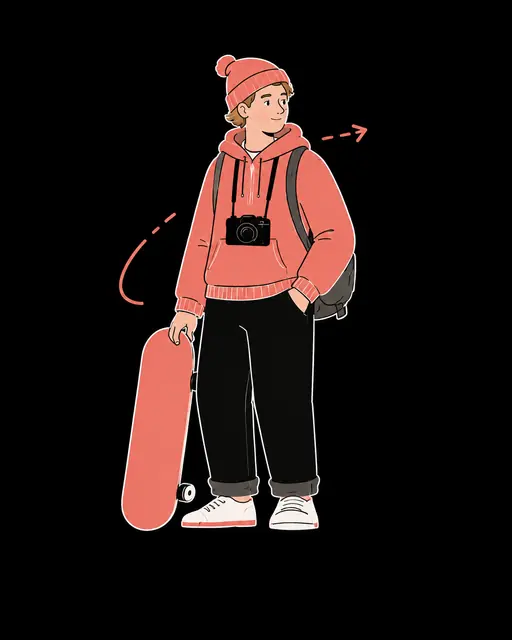
The ESTP is the person who acts while everyone else is still talking — who sizes up a situation in a glance, spots the opening, and moves on it with a confidence that's half skill and half nerve. They are energetic, perceptive, and relentlessly practical, drawn to action, excitement, and the tangible challenges of the here and now. In the Personality Type Test map this profile is named the Maverick, because that is the ESTP at full tilt: bold, independent, unbound by convention, willing to take the risk and make the move that the cautious won't. It is an exhilarating way to be wired, and one whose appetite for the moment can outrun its sense of consequence.
This guide is built around the seven dimensions TypeAtlas reports on — career, relationships, communication, conflict, stress, money, and growth — because a personality type is only useful when it touches the real decisions of a life. One rule holds throughout: these are tendencies, not destiny. A type describes where your energy and attention naturally run, not a ceiling on who you can become.
§I.Who the ESTP really is
Four trait axes combine to produce the ESTP pattern. Extraversion (E) means energy is generated through engagement with people, action, and the outer world. Sensing (S) means attention runs toward concrete reality, the immediate environment, and present opportunity rather than abstract patterns. Thinking (T) means decisions are weighed against logic and effectiveness before personal or interpersonal considerations. And Perceiving (P) means life is kept open, spontaneous, and flexible rather than planned and closed. The result is someone acutely tuned to the present moment, quick to analyse and act, and happiest responding to live opportunity rather than following a fixed plan.
At the centre of the ESTP is a sharp, action-oriented engagement with the immediate, physical, social world. They notice everything happening around them, read people and situations with shrewd accuracy, and prefer to solve problems by doing rather than deliberating. They are bold and pragmatic, comfortable with risk, drawn to excitement and physical challenge, and genuinely fearless in the kind of high-stakes, fast-moving situation that paralyses others. They live for the now, dislike anything that ties them down or slows them up, and trust direct experience and concrete results over theory and abstraction.
The recognised strengths of the type cluster around action and perception: decisiveness and initiative, formidable practical problem-solving, charisma and people skills, adaptability, boldness and calm under pressure, high energy, and a shrewd, realistic read on people and situations. The recognised growth edges are the same traits unbalanced: impulsiveness and excessive risk-taking, impatience with routine, theory, and rules, bluntness and insensitivity to others' feelings, difficulty with commitment and long-term planning, thrill-seeking, and a tendency to miss the emotional dimension and the downstream consequences. None of this is fixed. It is simply where this wiring tends to drift under load.
A note before we continue: TypeAtlas measures four continuous axes, not four switches. You might be clearly Extraverted and Sensing but only mildly Thinking. If any axis sits near the middle, read the adjacent type too — a "borderline T" ESTP will recognise a great deal of the ESFP (the Spark) in themselves. The four-letter code is shorthand for a position on four sliders, nothing more.
§I½.How the ESTP is often mistyped
The most common mix-up is ESTP vs ESFP. Both are extraverted, sensing, perceiving types who are energetic, spontaneous, fun-loving, and present-focused, so they are frequently confused — but the deciding axis is Thinking versus Feeling. The ESTP (the Maverick) leads with logic and analysis, drawn to action, competition, and solving the practical problem; the ESFP (the Spark) leads with personal values and feeling, drawn to connection, harmony, and shared enjoyment. An ESTP sizes up the situation strategically and acts; an ESFP reads the emotional mood and brings people together. If your Thinking–Feeling axis sits near the middle, you will recognise yourself in both.
The second common mix-up is ESTP vs ENTP. Both are extraverted, thinking, perceiving types who are quick, bold, and energised by challenge, but they differ on the Sensing versus Intuition axis. The ESTP (the Maverick) is concrete, present-focused, and action-oriented, drawn to tangible, real-world challenges in the moment; the ENTP (the Provocateur) is abstract and possibility-focused, drawn to ideas, theories, and debate. The ESTP wants to act on the real situation now; the ENTP wants to explore the idea. If your Sensing–Intuition axis sits near the middle, you will recognise yourself in both, and that ambiguity is information, not error. When the four-letter code feels uncertain, the underlying axis positions, with their confidence scores, are far more informative than the label.
§II.ESTP careers: best-fit work and what to avoid
The best careers for an ESTP share three ingredients: action and pace (dynamic, fast-moving work rather than slow routine), tangible results (concrete, real-world challenges with visible outcomes), and autonomy and people (freedom to operate and plenty of human interaction). Give an ESTP a fast-paced, hands-on, people-facing challenge with room to act and a clear payoff, and you get a decisive, charismatic high-performer; trap them in a slow, abstract, rule-bound desk job with no action and no autonomy, and the very energy that makes them formidable turns to restlessness.
Grounded in occupational data, the roles that recur for this profile fall into a few families. For an interest-based career map, see our guide to Holland codes and the six RIASEC career types. In sales and enterprise: sales professionals, entrepreneurs, real-estate agents, and business developers. In action and emergency work: paramedics, firefighters, police officers, and military roles where decisive performance under pressure is everything. In physical and dynamic fields: athletes and coaches, skilled trades, and roles in the trades and construction. And in fast-moving commerce: marketing, trading and finance, and persuasive, results-driven client roles. What unites them is action, pace, tangible results, autonomy, and people.
Just as useful is the anti-fit. ESTPs tend to struggle in slow, highly routine desk jobs, in abstract or theoretical work disconnected from tangible results, in rigidly rule-bound and heavily supervised environments, and in roles with little human interaction or action. The drain is rarely difficulty — ESTPs thrive on hard, high-stakes challenge — it is monotony, abstraction, confinement, and inaction. A common ESTP career risk is impulsiveness and short-termism: chasing the exciting opportunity over the wise one, neglecting follow-through once the thrill fades, and taking risks that don't always pay off. Naming that pattern early, and building some follow-through and foresight, is worth more than any further boldness.
A practical note on advancement: the ESTP's career tax is rarely capability and often follow-through, patience, and consequence. The decisiveness and charisma are real and the long-term planning, attention to detail, and sensitivity to others sometimes lacking. For most ESTPs, building follow-through, thinking past the immediate move, and tempering impulse unlocks more than any additional drive.
§III.ESTP relationships: love, friendship, and compatibility
In relationships the ESTP is fun, exciting, and generous, bringing energy, spontaneity, and a sense of adventure to a partnership. They are charming and attentive in the moment, they show love through action, experiences, and generosity — planning the adventure, solving the problem, making life exciting — and they keep things from ever getting dull. They need a partner who can keep up with their pace and energy and who gives them freedom; what they find harder is the slower, deeper work of emotional intimacy and long-term commitment, which sits in their less-developed territory and can make them restless.
The recurring relationship pattern to watch is excitement over depth, and difficulty with commitment. Because ESTPs live for the present and the thrill of the new, they can struggle with the emotional depth, steady consistency, and long-term planning that lasting relationships require, may get restless when the initial excitement settles into routine, and can miss or brush past their partner's emotional needs. The growth move is to recognise that the deeper, less exciting work of intimacy and commitment offers something the next thrill cannot, to attend to a partner's emotional world rather than just keeping things fun, and to value consistency as its own kind of adventure.
On compatibility, the popular pairings put ESTPs with grounded, steady partners who bring depth and stability to balance their energy — the ISFJ and ISTJ are commonly cited matches. But TypeAtlas's honest position bears repeating: type does not predict relationship success. Shared values, communication skill, mutual respect, and effort matter far more than a four-letter compatibility chart. The most useful thing type offers a couple is not a verdict on whether they belong together, but a shared language for why they each react the way they do when things get hard.
§IV.ESTP communication style
ESTPs are direct, lively, and persuasive communicators. They are quick, witty, and charismatic, comfortable commanding a room and winning people over, and they cut straight to the practical point without ceremony. They are engaging storytellers and natural persuaders, reading their audience in real time and adjusting on the fly, and they tend to be refreshingly honest — you get the unvarnished version. A conversation with an ESTP is rarely boring and usually has momentum.
The blind spots are bluntness and the emotional layer. Because ESTPs lead with directness and a results focus, they can be tactless without meaning to be, can steamroll or interrupt in their eagerness to act, and can miss or dismiss the emotional subtext that a slower, more attuned communicator would catch. The most valuable communication upgrades for this type are slowing down enough to read the emotional room, softening bluntness when someone is vulnerable, and learning to listen patiently rather than jumping straight to the move or the fix.
§V.ESTP conflict style
The default ESTP stance toward conflict is to confront it directly and deal with it head-on. They are comfortable with confrontation, even energised by it, and they will tackle a disagreement bluntly and pragmatically rather than letting it simmer — which makes them decisive and refreshingly unafraid of hard conversations. The risk is that the same directness and competitiveness can tip into combativeness: an ESTP can treat a conflict like a contest to win, push too hard, and miss that the other person is hurt rather than merely opposed, dismissing the emotional dimension as beside the point.
Handled well, ESTPs are direct, honest, and genuinely able to address problems others avoid without getting tangled in drama. The growth move is to recognise that not every conflict is a competition, that winning the exchange and resolving the relationship are different things, and that a partner's or colleague's feelings are legitimate and need acknowledging even when they aren't logical. For ESTPs, the hardest skill in conflict is dialling back the competitive edge enough to actually hear the emotional truth of the other side.
§VI.ESTP and stress: triggers and recovery
ESTPs are reliably worn down by a specific set of conditions: monotony and slow routine, rules and restrictions that constrain their freedom, abstract theorising with no concrete application, being forced to sit still or be inactive, heavy emotional demands, micromanagement, and confinement of any kind. Because their energy comes from action, stimulation, and freedom, an environment that removes all three — static, rule-bound, abstract, confining — drains them fast and can curdle their characteristic boldness into restless frustration.
Under severe or sustained stress, the characteristically energetic, present-focused ESTP can flip into an uncharacteristic mode. In type theory this is the eruption of the inferior function, Introverted Intuition: the normally action-oriented, optimistic ESTP becomes uncharacteristically withdrawn and preoccupied with dark thoughts about the future, may fixate on hidden meanings, worst-case scenarios, or a vague sense of impending doom, and loses access to their usual confidence and engagement with the moment. The practical recovery toolkit is consistent: physical activity and action to discharge the energy, novelty and stimulation, freedom and a change of scene, hands-on engagement with a concrete challenge, and — less naturally for this type — allowing themselves to slow down and process rather than outrun the discomfort. ESTP burnout usually comes from confinement, monotony, and constraint, not from any lack of capability. If stress is persistent and affecting your daily function, that is a reason to talk to a professional, not a personality quirk to push through.
The TypeAtlas Personality Test
Thirty-two LBL-original statements, four trait axes with per-axis confidence, your closest-fit alternatives, and practical interpretation across all seven life dimensions — careers grounded in O*NET labor-market data, and clear limits on what type can and cannot tell you. Free, runs locally in your browser, no account required.
Take the test →§VII.ESTP and money
Money is the dimension almost no personality resource covers honestly, and the ESTP pattern is genuinely distinctive — marked by optimism, appetite for risk, and a present-focused taste for spending. For the ESTP, money is a means to action, experience, and enjoyment now: it funds the adventure, the toy, the opportunity, the good time. ESTPs are often capable earners — their drive, charisma, and decisiveness translate well into sales, business, and commission-based work — but their present-focus and risk appetite mean money tends to flow out as fast as it comes in, on experiences, status, and the next exciting bet, while saving and long-term planning take a back seat.
The strengths here are real — ESTPs are resourceful, opportunity-spotting, and willing to take the calculated risks and seize the chances that can build real wealth. The risks are equally characteristic. Impulsive spending and risk are the big ones: a present-focused, optimistic, risk-tolerant mind can spend freely, underestimate downside, and over-commit to the exciting opportunity. Weak long-term planning is the second: retirement, saving, and distant goals feel abstract and dull next to immediate action, so they get neglected even when earnings are strong.
The practical move for an ESTP is to put guardrails around the optimism and automate the boring discipline before the money can be spent. Automating saving and investing protects the future from a present-focused spender; keeping a deliberate cash buffer hedges the appetite for risk; and treating the choice between a sure thing and an exciting gamble as an explicit calculation, rather than a gut call in the heat of the moment, channels the type's real shrewdness toward the decision that matters. If a concrete number would sharpen the bet — expected return, downside scenarios, or what an automated saving habit compounds to — our sister project FinCalcs has free calculators built for exactly that kind of analysis.
§VIII.ESTP growth: how the Maverick develops
Healthy development for the ESTP runs in one consistent direction: from impulsive present-seizing toward considered, sustainable action. The unhealthy ESTP is all momentum and no foresight — chasing thrill and opportunity without thought for consequence, blunt and dismissive of others' feelings, allergic to commitment and follow-through, and leaving a wake of half-finished ventures and bruised relationships. The mature ESTP keeps the boldness, charisma, and decisive energy but adds what it tends to skip: they think past the immediate move to its consequences, attend to the emotional dimension in themselves and others, follow through on what they start, and commit deeply enough for relationships and work to mature.
Three moves do most of the work. First, think past the moment — pause long enough to weigh consequences and consider the long game, so that boldness becomes shrewdness rather than recklessness. Second, develop the emotional channel — slow down to read and value the feelings that your action-focus tends to skip, in yourself and others. Third, follow through and commit — recognise that depth and persistence, which require staying past the thrill, offer something the next opportunity cannot. Growth does not turn an ESTP into a different person. It turns the reckless, blunt, commitment-shy version into the bold, capable, genuinely effective doer the type is capable of being.
A closing reminder, because it is the most important sentence on this page: this is a description of tendencies, not a diagnosis or a destiny. A personality type is a useful map of where your energy and attention naturally run — a way to understand yourself and the people around you with more compassion and less friction. It is not a box, not an excuse, and not a prediction. The most accurate, nuanced picture comes from your own four axes, with their own confidence scores, which is exactly what the test is for.
Common questions about the ESTP.
The questions we hear most often from people who test as ESTP — and from the people trying to understand them.
i.What is the difference between ESTP and ESFP?
Both are extraverted, sensing, perceiving types who are energetic, spontaneous, and present-focused, which is why they are frequently confused. The deciding axis is Thinking versus Feeling. The ESTP (the Maverick) leads with logic and analysis, drawn to action, competition, and solving the practical problem; the ESFP (the Spark) leads with personal values and feeling, drawn to connection, harmony, and shared enjoyment. An ESTP sizes up the situation and acts; an ESFP reads the emotional mood and brings people together. If your Thinking-Feeling axis is near the middle, you will recognise yourself in both.
ii.What are the best careers for an ESTP?
Roles that combine action and pace, tangible results, and autonomy with people: sales, entrepreneurship, and real estate; action and emergency work (paramedic, firefighter, police, military); physical and dynamic fields like athletics, coaching, and the skilled trades; and fast-moving commerce like marketing, trading, and persuasive client roles. ESTPs tend to struggle in slow, routine desk jobs, abstract or theoretical work, rigidly rule-bound environments, and roles with little action or human interaction.
iii.Why are ESTPs so impulsive?
ESTPs live in the present moment and are wired to act on immediate opportunity, so the exciting move in front of them tends to win over slower deliberation about consequences. This is the same trait that makes them decisive and bold in a crisis. The growth move is to pause long enough to weigh consequences and the long game, so that boldness becomes shrewdness rather than recklessness, and to build the follow-through that turns seized opportunities into lasting results.
iv.Who is the ESTP most compatible with?
The commonly cited matches are grounded, steady partners who bring depth and stability to balance the ESTP's energy, such as ISFJ and ISTJ. But type does not predict relationship success. Shared values, communication skill, mutual respect, and effort matter far more than any compatibility chart. Type is most useful as a shared language for understanding each other under stress, not as a verdict on who you should date.
v.Is the ESTP type scientifically valid?
Four-letter type systems are popular and genuinely useful for self-reflection and shared language, but they are not clinical instruments, and the binary-type model has known measurement limits compared with continuous trait models. TypeAtlas reports continuous axes with confidence rather than hard boxes for exactly this reason. Treat your result as a thoughtful starting point for understanding yourself, not as a fixed or diagnostic fact.
@misc{lifebylogic_estp_2026,
  title  = {The ESTP Personality Type (The Maverick): Careers, Relationships, and Growth},
  author = {{LifeByLogic}},
  year   = {2026},
  url    = {https://lifebylogic.com/learn/personality-types/estp/}
}- Jung, C. G. Psychological Types (Collected Works, Vol. 6). Princeton University Press, 1971 (orig. 1921).
- Myers, I. B., & Myers, P. B. Gifts Differing: Understanding Personality Type. Davies-Black Publishing, 1995.
- Myers, I. B., McCaulley, M. H., Quenk, N. L., & Hammer, A. L. MBTI Manual: A Guide to the Development and Use of the Myers-Briggs Type Indicator (3rd ed.). Consulting Psychologists Press, 1998.
- McCrae, R. R., & Costa, P. T. “Reinterpreting the Myers-Briggs Type Indicator from the perspective of the Five-Factor Model of personality.” Journal of Personality, 1989;57(1):17–40. doi.org
- Pittenger, D. J. “Cautionary comments regarding the Myers-Briggs Type Indicator.” Consulting Psychology Journal: Practice and Research, 2005;57(3):210–221. (On the validity limits of the type model.)
- U.S. Department of Labor, Employment & Training Administration. O*NET OnLine occupational database. onetonline.org (Basis for the career-fit examples.)